




















As the Fall 2025 semester winds down, Wofford students continue to be faced with changes in their community.
Chick-fil-A will be leaving this spring, a new president will serve in fall 2026 and the new basketball coach has taken the court. Wofford students cannot help but wonder what change will be made next.
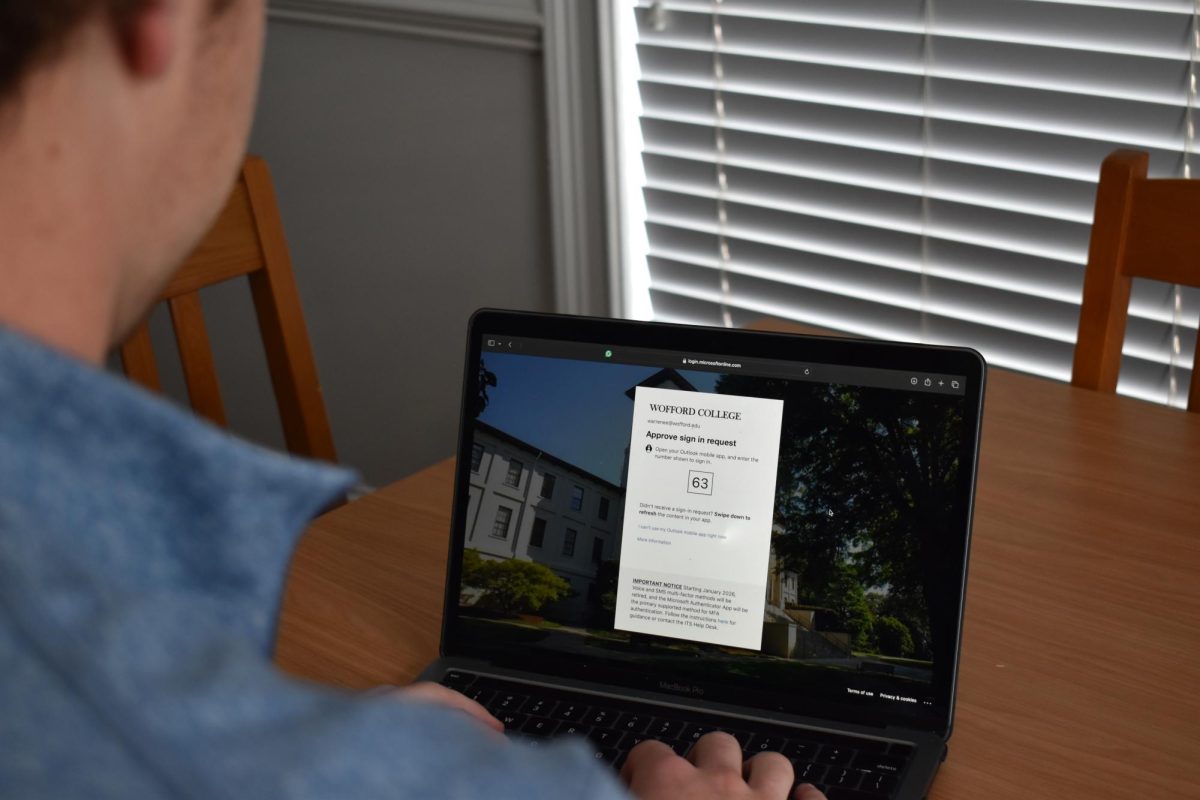
One such change will occur by Interim. Wofford ITS has the plan to disable SMS text and voice call options for Multi-Factor Authentication by the end of this semester. Beginning in January, the Microsoft Authenticator app will be the supported multi-factor authentication method used by Wofford College.
Although a seemingly insignificant change compared to the other changes Wofford students are experiencing, most students admitted to finding this change inconvenient in some way.
Out of 84 respondents, 54 students use an authentication method via cell, either text or phone call, while 30 students use the Microsoft app. The options that the majority of Wofford students use will now be removed. 55% of students thought that this change would be “very inconvenient”, 22% slightly inconvenient and 23% thought this would be no inconvenience largely because they already use the app.
Jokingly one student responded to this topic,
“First, they take Chick-fil-A and now they take the text via phone away. Next, they take the row.”
Surely the college will not be shutting down the row, however; this does beg the question of why? Why does ITS feel the need to consolidate multi-factor authentication into one option?
ITS responded to these questions, hoping to provide clarity to Wofford’s students.
“SMS and Voice MFA methods are considered among the least secure methods to use in modern MFA. Wofford has had many incidents over the last couple years where one of those methods was used to breach a Wofford account. Retiring both SMS and voice and moving towards Authenticator App and Passkeys allows Wofford to better protect its community and data against bad actors.”
ITS explains the dangers of email that Wofford has been dealing with.
“Phishing emails remain the top threat faced by all Wofford community members. Cyber criminals have not only increased the amount of phishing emails; they are also using AI to make them harder to identify. Wofford’s email security blocks over 20,000 emails per month categorized as phishing, but still, some get through to user’s mailboxes. Password reuse is also a common security risk.”
ITS acknowledged that students may feel annoyed but hopes that they will understand the precautions set for success as a community.
“[ITS] is hoping that students realize the benefit of better securing their accounts, not only for them personally, but also that keeping their account secure helps the Wofford community as a whole.”
In order to combat this risk, the simple change to retire SMS and Voice puts us on the path to better securing ourselves and our college.
Overall, students need to feel some degree of security and sameness in their campus community.
One student expressed that she just needs Wofford to be consistent.
“It feels like they are always changing stuff like this.”
Of course, change is necessary, and this change does seem to benefit Wofford students overall. However, Wofford must be considerate when bringing about other changes in the future. When such changes occur, Wofford students must be consulted and given space to express potential frustrations.