


















We are six generations deep in our modern workforce. Spanning through the Silent Generation to Gen Alpha, roughly 60.2 percent of people aged over 16 are employed. Within the Millennial generation alone, around 76% of millennials are employed.
It’s Millennials and Gen Z who started the trend online of the “generational age gap.” A technical term to refer to the disparities between generations in the workforce, the generational age gap seems to be growing in recent years.
Gen Z has been a pushing force in the workforce with revolutionizing the idea of work-life balance. In addition, Gen Z brings a new understanding of technology and inclusivity in the workplace unlike other generations.
In the 1980s, the nation was forever changed by PresidentReagan’s impact on the economic mindset of his generation. His values passed on through American markets and made the “American Dream” accessible through practices in capitalism.
The effects of his presidency still ring true today; in our lives as college students, many of us have been told we had to get a degree to get a job. This is partially true, as by 2031 around 72% of all jobs will require a college degree.
This will require the majority of the public to go onto a higher education, which normally promotes well-informed and mindful graduates entering employment after their schooling. If the statistic holds true though, college will need to be made easily accessible.
We are seeing trends of Gen X turning to forums online asking, “why will no one hire me?” Actually, we see many people asking that from all different generations as the job market gets harder to navigate.
But Gen X is a missing gap between Baby Boomers and Millennials in the workforce currently. Hence the videos online stating, “me and someone’s dad at work.”
It is funny seeing a young, bright employee run circles (literally) around someone’s dad, but it begs the question of what we’re losing in the process too. It’s known that Gen X makes up a large portion of the current workforce, but the rates are declining as Gen X is often overlooked as employees.
Compared to the Millennials, Gen X are more likely to not receive a promotion due to a workforce favoring the innovation and mindsets of the younger generations. Many Gen X are outraged by this, and understandably so once a detailed account of Gen X is discovered.
Jobs that have been relied upon for years are suddenly lost or underappreciated with many Gen X’ers. As Gen X leaves the workforce, the age gap has surfaced.
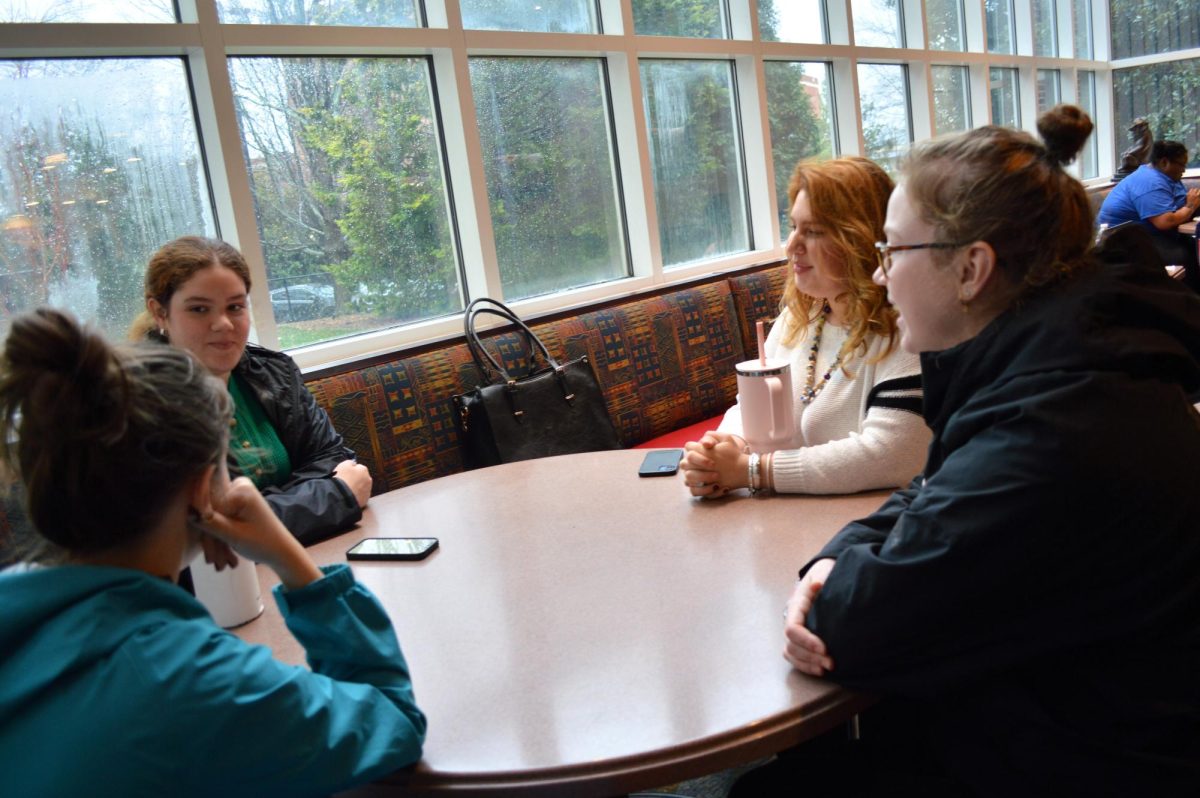
Overall, the age gap seems to be taken positively by employees of different ages. Young workers like to talk to older members at their job, whether it be for professional development or human connection.
Though the age gap does not benefit some, it has ushered in a new time for generations that are usually disconnected to find a common ground.