













I have only paid attention to weather changes when it either inconvenienced me or was historically significant. The heat this summer was an inconvenience, and Hurricane Helene was extremely historically significant.
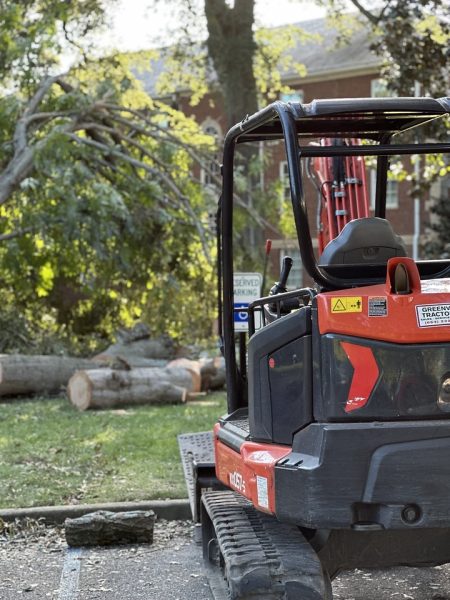
Most of my community in the upmost upstate corner of South Carolina wasn’t affected like Western North Carolina was. Our relief efforts consisted of going to the family friend’s house to help them move the tree out of their driveway or letting friends use the gas stove in your home.
Asheville, however, was completely devastated, and with so many businesses losing their ability to produce anything, all of the south that relied on Asheville’s major businesses were affected.
Fortunately in the year past since Helene we have seen major reform and relief efforts made for Western North Carolina’s favor.
Many programs and institutions have contributed to Helene relief efforts, even a year later after the fact. Liberty University deployed teams of students and faculty to rebuild homes. Operation Airdrop contributed the necessities for those trapped in the mountains.
Western Carolina University located in Cullowhee, NC, has dedicated their 2025 marching band show to the community created from the tragic aftermath of Helene.
Helene will remain infamous in the South Eastern most of the United States. The results from the disaster can still be seen in the beloved places of the South: the Blue Ridge Parkway, Asheville’s French Broad River and our Great Smoky mountains.
Simply put, Helene devastated us due to our lack of “resources” to combat such a storm. Geography in the Appalachian area causes dangerous flooding and landslides to occur commonly, and with Helene’s power combined, the results were deadly to communities.
The issue is now that we see every community with a lack of resources being affected by natural disasters profoundly. After Hurricane Melissa hit Jamaica on Oct. 28th, the stricken families on the island are now an example of the need of relief like that that was given to Western NC.
Melissa as a Category 5 storm covered the entire island, and its wind speeds hold a new record for highest and fastest acceleration known in the history of weather-recordkeeping.
The state of emergency called in Jamaica was so overwhelming that many people were either stranded or separated from their families. Experts had warned prior to the storm’s landfall about the severity of its impact, but seeking refuge became a panic within itself.
Now, there are businesses and homes scattered across the island and all infrastructure lost. The situation is a reflection of Helene with possibly worse implications. Not only that, but both of these storms could reflect a rising concern relating to how climate change is beginning to show itself.
If our communities were ravaged by Helene, I think we can look at the Caribbean countries and understand where humanity should play a role in this. The disasters caused by climate change won’t be changing soon, but the way our societies interact together to find relief should change.
The support organizations and universities have shown Western NC should apply to the Hurricane Melissa victims as well.